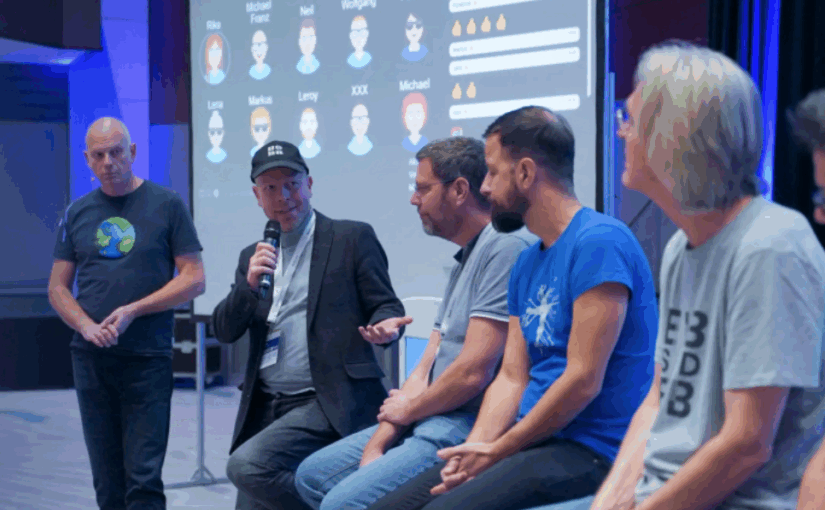
Artikel: Mit System zu besserer Software

In der Maiausgabe von entwickler.de ist mein Leitartikel zum Thema Systemisches Softwareengineering erschienen.
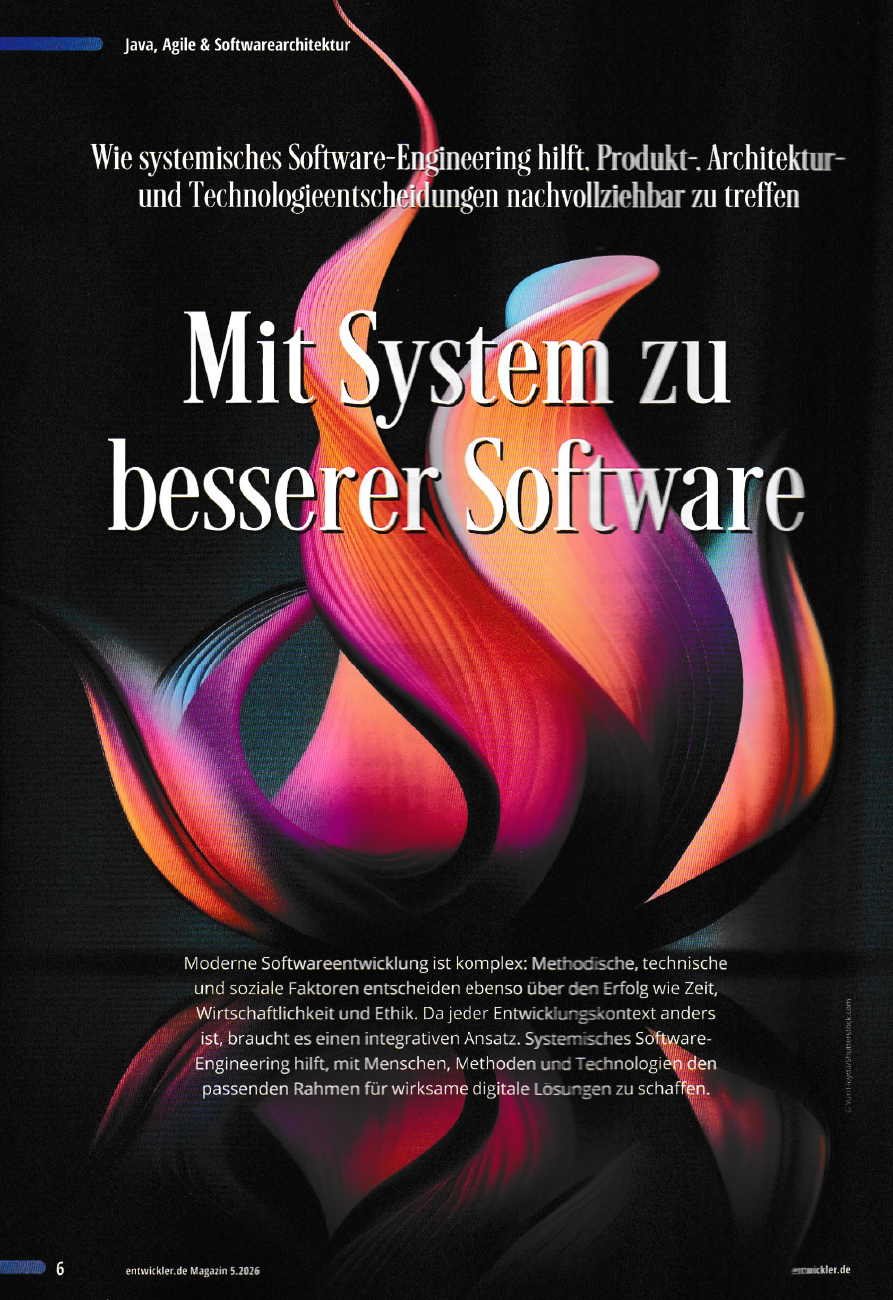
Der Artikel beschäftigt sich mit der Frage, wie wir Kontexte in Organisationen und Unternehmen so gestalten können, damit Software optimal hergestellt werden kann.

Besondere Aktualität hat das Thema, da Software zunehmend von Mensch/Maschine Kollaboration bestimmt wird und viele Themen aktuell neu ausgehandelt werden. Oder wie es ein Kollege neulich meinte: “Alles ist offen”.

Sehr unterschiedliche Faktoren bestimmen über Erfolg oder Misserfolg von Softwareprojekten. Den Zusammenhang dieser Faktoren gemeinschaftlich zu verstehen und in wirksame Maßnahmen zur Erreichung der gewünschten Ziele umzusetzen ist der Zweck systemischen Softwareengineerings.

Einsatzgebiete finden sich beispielsweise in der Strategieentwicklung, im Veränderungsmanagement, bei Technologieeinsatz und Produktentwicklung oder der schnellen Entscheidungsfindung.

Nicht zuletzt wird Systemisches Denken von Organisationen wie dem World Economic Forum , Forbes, dem Stifterverband und vielen anderen zu den wichtigsten kognitiven Zukunftskompetenzen gezählt.

Ich lade alle ein sich mit diesem spannenden Thema tiefer zu beschäftigen. Der Artikel ist ein guter Einstieg dazu. Er ist verfügbar bei entwickler.de oder gerne auf Anfrage bei mir. Zur praktischen Vertiefung eignet sich unser Workshop Systemisches Denken in der professionellen Softwareentwicklung.

Systemisches Denken in Zeiten künstlicher Intelligenz
Moderne agile Frameworks bieten nachweislich enorme Möglichkeiten zur Verbesserungen der Softwareentwicklung. Seit mehr als 20 Jahren der Anwendung müssen wir erkennen, dass es vielen Unternehmen noch immer schwer fällt das Potential effektiv zu nutzen. Mit Systemischem Denken kann sich das ändern.

Continue reading Systemisches Denken in Zeiten künstlicher Intelligenz

Das Unbeherrschbare verstehen und gestalten – mit Systems Thinking zu besseren Entscheidungen

Als Softwareentwickler sind wir lineares Denken gewohnt. Jedoch verhält sich die Welt meistens nicht wie eine Build Pipeline. Systemisches Denken kann uns dabei helfen, nichtlineare Zusammenhänge besser zu verstehen und in komplexen Situationen erfolgreich zu agieren. Nach einer Einführung in systemisches Denken schauen wir uns typische Situationen aus dem Bereich der Softwareentwicklung aus neuen Perspektiven an und entwickeln gemeinsam Einsichten und Erkenntnisse. In dieser Session blicken wir mit Neugier nicht nur über den Tellerrand sondern direkt in das ganze Esszimmer.

Vortrag: https://jax.de/agile-culture/system-thinking-bessere-entscheidungen/

Workshop: https://www.pleus.net/systemicengineering.htm
Agile – Ein Sehnsuchtsort
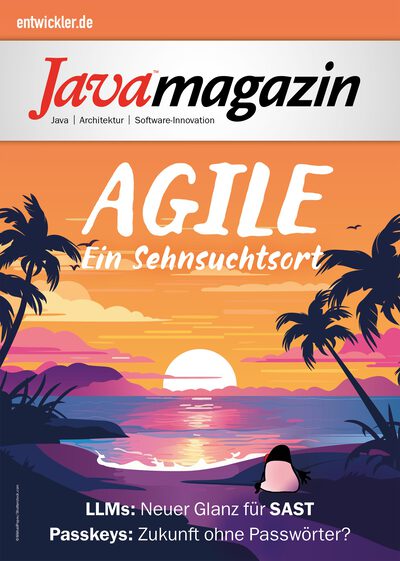
In der Dezemberausgabe des Javamagazins findet sich mein aktueller Leitartikel zum Thema Agiles Arbeiten.

Der ganze Artikel findet sich unter:

https://entwickler.de/agile/agiles-arbeiten-obsoleszenz-unverzichtbarkeit

Wer das Thema gerne vertiefen möchte, ist herzlich eingeladen zur W-JAX in München. Auf dem diesjährigen FLOW-Day werden wir das Thema vertiefen und spannende Ansätze kennenlernen, um die Art wie wir Software entwickeln weiter zu verbessern.

Nutze gerne diesen Coupon bei der Anmeldung:

Softwareentwicklung als Soziotechnisches System

Das Thema Soziotechnische Systeme gewinnt in der Softwareentwicklung zunehmend an Bedeutung. Und das ist gut so.

„Im Allgemeinen muss das Management erkennen, dass der Erfolg eines Unternehmens davon abhängt, wie es als soziotechnisches System funktioniert, nicht einfach als ein technisches System mit ersetzbaren Individuen, die hinzugefügt werden und sich anpassen müssen.“

https://de.wikipedia.org/wiki/Soziotechnisches_System

Dies ist eine wichtige Erkenntnis, da die erfolgreiche Entwicklung von Software in Rahmen von Projekten, sowie deren kontinuierliche und nachhaltige Weiterentwicklung in hohem Maße von Faktoren des sozialen Gefüges und deren Zusammenarbeit abhängt.

Das Wissen darüber machen wir uns seit über 25 Jahren in zahlreichen Projekten zunutze und lassen es regelmäßig in die Projektarbeit einfliessen. Beispielsweise wenn es darum geht Teams zusammenzustellen und zu führen.

Einige Beispiele finden sich unter https://cswob.de/

Das geht so weit, das wir mit der Creative Software Workbench einen Rahmen geschaffen haben, in dem die Säule Menschen und Teams eine zentrale Rolle spielt.
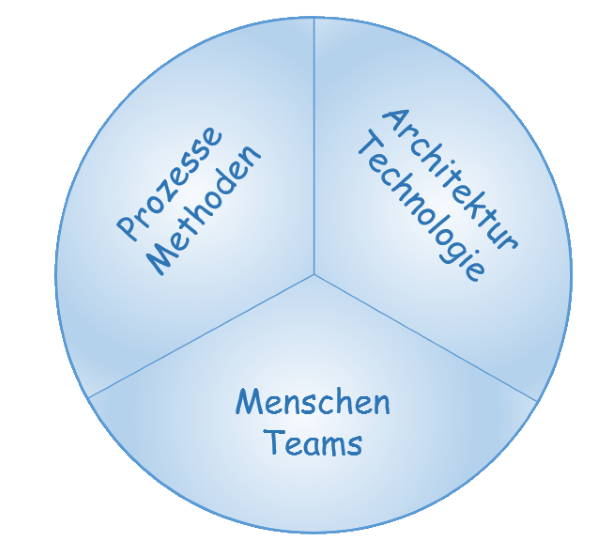
Das Wissen und die Erfahrung aus vielen praktischen Anwendungen und Erfolgsgeschichten lässt sich in andere Projekte integrieren. Dabei unterstützen wir sie gerne…

The secrets of evolvable software

TL;DR: Modularization is the key to evolvable software. This blog post sheds some light on different aspects of modularization of software systems.

Motivation

The IT business is very dynamic. Changes happen everytime and everywhere. Programming languages, frameworks, tools, infrastructure – it feels like almost everything is changing all the time. For enterprises this is a challenge as it constantly requires modernization and maintenance. Ok, this is part of the nature of software systems today you might say, so why should we care?

Because from a business perspective it would be nice to have systems which do not require expensive rewrites now and then for cost reasons. Instead it would be better to have software that is able to evolve over time. Of cource maintenance is always required for example to get security patches. But if the software is build with evolvability in mind it can be adapted to future needs more easily (without major reimplementation). Evolvable software is structured in a way that enables change. It is one of the core values of Clean Code. Simply put evolvability is an important trait of modern software systems.

How can we get there? Let’s have a look at several aspects and good practices to create evolvable software.

Design

The key of evolvable software is in its design. And because the business domain is much more stable than technologies, the business is a good basis for design considerations. Domain Driven Design (DDD) means exactly that. Instead of using technical concepts such as message brokers, databases and so on we use business concepts such as products, sales or invoicing to organize our software system.

Especially important is the strategic design and in particular the concept of Bounded Contexts which is the central design pattern in DDD. Bounded Contexts foster modularity already at the design level. Domain design is carried out together with the experts from the particular domains and can be documented ideally with a graphical notation such as UML.

Codebase

Based on the domain design the codebase can be created and organized. I often see systems in which design model and code are decoupled which makes it difficult to understand the codebase. Moreover code is often structured based on technical concepts such as controllers, entities and so on. Although technical terms can be used at a lower level, the main structuring concept should be the domain. It is important to keep the design structure from the business domain at the code level to foster maintainability and evolvability.

Modularity is of utmost importance when it comes to evolvable software systems. This has to do with the fact that even the best programmers in the world are not able to understand software that is too large and complex. Modularity helps to chunk systems into smaller parts that are more likely to be understood.

Assume a Java based system. What are the options for modularity. At the language level we have packages. Actually packages are intended to structure a codebase into logical units. By keeping classes package private and exposing dedicated interfaces you can enforce encapsulation of your modules. Unfortunately it does not properly work with subpackages, but if a module is not too large this is not neccessarily a problem. By enforcing architectural constraints on your codebase with tools such as ArchUnit you can even relax encapsulation while keeping the codebase clean. If you want versioned artifacts, you can create libaries for instance with maven or gradle. If you need more independence put the libraries into separate repositories.

Services and APIs

Is that already a service? If the module has a dedicated interface contract I would say yes. But that is more of a philosophical question 😉

If you want to expose the service in an interoperable way, just add an HTTPS-Endpoint with REST- or RPC-style. No matter whether you choose a code- or contract-first approach, always go for an API-first aproach, as this gives you a better an more though-out structure which is usually closer to the business domain. My personal favourite is contract-first, for instance based on OpenAPI, because it is technology agnostic and opens the way for alternative implementation languages. Do you remember? We are talking about evolvable software. Even programming languages are changing over time. And even asynchronous interfaces and message broker based services deserve an API-contract, which can be created using AsyncAPI.

Frontend Components

Discussions about services most of the time happen on the server side in the form of service oriented architecture or microservices. But user interfaces can be modularized as well. Most modern UI frameworks such as Angular or React have a component model on board. UI components have interfaces as well. Those interfaces comprise everything that communicates with the outside world of the component such as attributes, events, cookie/local/session storage and window messages that should be properly documented. Modular distribution can be achieved by creating npm packages. If you want to increase interoperability and freedom of technology implement ui components as web components.

Containers

Containerization is a strong trend for good reasons. But over the last years the industry has learned that it is not always the best option to deploy each service or module as a separate unit. Deploying and running a lot of small units requires more infrastructure which can be costly to implement and maintain. In the past the pendulum swang from monoliths to microservices architectures which are both extreme in its implementations. Today so called moduliths are combining modularity with monolithic deployment models. Starting with a modulith can be a good option, evolving it to a microservice-based deployment model if and only if required. You can deploy a modulith standalone or using Docker and Kubernetes the same way as you would do with a single service if this is the runtime of your choice. Anyway it is important to find a proper granularity of modules. Self contained systems aligned to the business domains are often a good option in this regard. This also helps to keep cognitive load and responsibility manageable at the team level. This is again a matter of design.  

Limits

What happens when the programming Plattform changes completely, let’s say from .NET to JEE or from Java to Python? Even then you can save parts of your investments. Design outcomes and standards-based artifacts such as OpenAPI contracts are platform agnostic and can be reused. And as the business domain is usually quiet stable and not connected to changes in technology , you have a good chance to reuse your design outcomes as is.

Summary

Modularization is essential when it comes to creating evolvable software. Technologies are powerful enough to do it. Modular software is primarily a matter of design and the will to invest some effort into it. From the many projects that I have seen in my career, I am convinced that it is one of the most important things to do when creating professional software systems.

Aliens and Avatars – Explorative Product Deveploment in Action
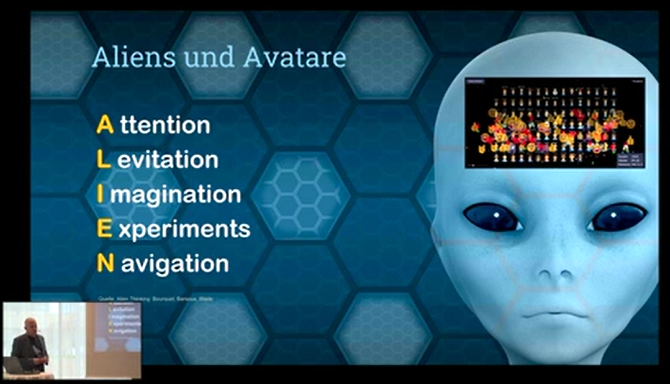
On this years W-JAX I had the pleasure to host a session about explorative product development. The session was about the appropriate mixture of methods and software architecture especially, but not only, for projects in the pioneering phase. A good example of the Creative Software Workbench in action. You can see the session recording on entwickler.de (subscription required).

Lean Coffee at Jax Innovation Forum and DevOpsCon
This autumn I am going to moderate the Jax Innovation Forum and the DevOps Transformation Day again. On both days we will also have Lean Coffee Sessions, a format that incorporates input from the attendees. It is very energetic, interesting and fun. On top of that we conduct it even in hybrid mode, in which you can participate no matter whether you are on site or in the office. If you are interested in those kinds of events we can also carry it out it in your organisation. The event will be adjusted according to your corporate needs. You can find more information here.